Building a dental practice? Here is the step by step process of best dental office construction in Selma, CA — design, permits, build-out, and opening.
Building or remodeling a dental office is one of the most complex commercial construction projects a healthcare professional will ever take on. A dental office is not just a room with chairs. It is a healthcare facility with specific code requirements, specialty equipment, particular plumbing and electrical needs, infection control standards, and patient experience considerations that affect everything from layout to lighting.
Dentists who go through this process for the first time often underestimate how different it is from a typical office build-out. The decisions, the timeline, and the cost all run higher than comparable office work. But when the project is managed well, the result is a functional, efficient practice that supports clinical work and patient experience for the next 20 to 30 years.
Hamel Development, Inc has worked on dental office construction projects across Selma, Fresno, and the broader Central Valley for years, and we know which steps matter most. This article walks through the step by step process of building or remodeling a dental office so you know what to expect at every phase from initial planning through opening day.
Step One: Define Your Practice Vision
Before any drawings or quotes happen, you need a clear sense of what you are building. The clarity at this stage shapes every decision that follows.
Key questions to answer:
How many operatories will the practice have? This is the single biggest driver of size and cost.
What specialty services will the practice offer? General dentistry, pediatric, orthodontic, oral surgery, and other specialties each have different facility requirements.
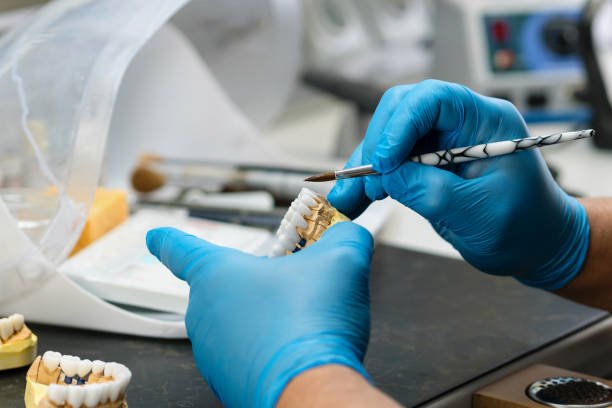
Will the practice have a lab on-site or send work out?
What is the patient flow you want? From check-in through check-out, the path patients take through the space affects layout.
How many providers will work in the practice at peak capacity?
What is the staff workflow? Hygienists, assistants, and front office staff all have different space needs.
Will there be CT or panoramic imaging on-site? These pieces of equipment have specific shielding and electrical requirements.
Your answers to these questions become the foundation for the design phase that follows.
Step Two: Site Selection or Existing Space Evaluation
The right site matters significantly for dental practices. Visibility, accessibility, parking, and demographic fit all affect practice success.
For new construction sites, evaluate:
Lot size adequate for the building plus required parking and setbacks.
Zoning that allows medical or dental use.
Utility availability including water, sewer, power, and gas.
Accessibility from major roads with good visibility.
Demographics that support the practice type.
Future development plans in the area.
For existing buildings or spaces, evaluate:
Building age and condition.
Existing electrical, plumbing, and HVAC capacity.
Layout flexibility for dental-specific needs.
Code compliance and any required upgrades.
Ceiling height adequate for dental equipment installation.
Floor structure capable of supporting dental chair and imaging equipment loads.
Step Three: Design Development
This is where dental-specific expertise really matters. A general commercial architect can produce a basic office design. A dental-specialty design team produces a design that actually works for dental practice.
Key design considerations:
Operatory Layout
The size, shape, and equipment positions in each operatory significantly affect clinical efficiency. Most dental offices use operatories of about 100 to 120 square feet. The specific dimensions depend on the equipment configuration and right-handed versus left-handed dentist preference.
Plumbing Requirements
Dental offices have specialized plumbing needs. Multiple water lines per operatory. Vacuum lines for suction systems. Compressed air lines. Hot water requirements for sterilization. Backflow prevention. The plumbing design is one of the largest single areas of dental construction cost.
Mechanical Systems
HVAC for dental offices needs proper air exchange rates, isolation between treatment areas and waiting areas, and exhaust requirements for amalgam separators and other equipment.
Electrical Requirements
Dental equipment has specific electrical needs. Operatories typically have multiple dedicated circuits. Imaging equipment requires specific voltage and amperage. Sterilization areas need adequate power for autoclaves. CT and panoramic imaging require dedicated electrical service.
Sterilization Area Design
The sterilization area needs to support a clean workflow from contaminated instruments through cleaning, sterilization, and storage. Poor sterilization area design slows clinical operations significantly.
Infection Control
Materials, finishes, and design need to support infection control protocols. Smooth, cleanable surfaces. Proper drain placements. Appropriate ventilation. These requirements differ from typical office design.
For dental professionals in this area, our team handlesBest Dental office construction in Selma, CA with attention to all of these dental-specific design considerations. We work with practice owners to make sure the finished space actually supports the clinical work, not just the basic building requirements.
Step Four: Realistic Cost Planning
Dental office construction costs run higher than typical commercial work because of the specialty systems involved. Here is what to expect for the Selma area:
| Project Type | Cost per Sq Ft | Typical Practice Size |
| Dental office tenant improvement | $150 – $300 | 1,500 – 3,500 sq ft |
| Dental office new construction | $300 – $500 | 2,500 – 5,000 sq ft |
| Pediatric dental construction | $200 – $400 | 2,000 – 4,500 sq ft |
| Specialty (oral surgery, ortho) | $250 – $500 | 2,500 – 5,000 sq ft |
A typical 3,000 square foot general dentistry practice in Selma might run $500,000 to $1,200,000 for full new construction, depending on finish level and specialty equipment included. Tenant improvements on existing space run lower but still cost significantly more per square foot than typical office work.
Equipment costs are separate from construction costs. Plan to spend $300,000 to $600,000 or more on dental equipment for a new practice, depending on operatory count and technology level.
A 2023 industry report from the American Dental Association noted that dental practice construction costs averaged 40 to 60 percent higher than general office construction in comparable markets, with the largest premiums going to plumbing, electrical, and HVAC systems that meet dental-specific requirements.
Step Five: Permits and Specialty Approvals
Dental office construction involves more permits and approvals than typical commercial work. The process includes:
Building permits from the City of Selma covering the basic construction.
Mechanical, electrical, and plumbing permits.
Specialty health department approvals for the dental facility itself.
Title 24 energy compliance documentation.
If imaging equipment is involved, radiation safety reviews.
Possible HOA or commercial association reviews depending on the property.
The full permit process for dental office construction typically takes 12 to 24 weeks. Plan check is often longer than typical commercial work because reviewers verify the specialty systems carefully.
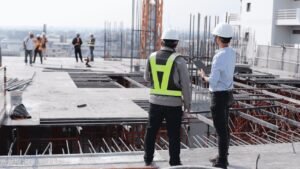
Step Six: Construction Sequence
Once permits are issued, construction follows a fairly standard sequence with dental-specific timing.
Phase One: Demolition and Rough Work
Existing finishes and items come out. Site preparation happens. Foundation work for new construction. Underground utilities get installed. This phase typically runs 3 to 8 weeks depending on scope.
Phase Two: Framing and Building Shell
New construction work to enclose the building. Roof installation. Exterior walls and windows. This phase only applies to new construction and runs 6 to 12 weeks.
Phase Three: Mechanical, Electrical, and Plumbing Rough-In
This is where dental-specific work intensifies. Specialty plumbing systems get installed. Electrical for dental equipment gets roughed in. HVAC systems for dental facilities get installed. This phase typically runs 6 to 12 weeks.
Phase Four: Insulation and Drywall
Insulation and drywall installation throughout. Generally similar to typical commercial work but with attention to acoustic separation between operatories.
Phase Five: Final MEP and Specialty Installations
Final electrical fixtures and devices. Plumbing fixtures including dental-specific items. HVAC final connections and balancing. Specialty equipment installations begin.
Phase Six: Finishes and Equipment
Flooring, paint, casework, and final finishes. Dental equipment installation often happens in parallel with final building finishes. The equipment vendor coordinates with the construction team to install chairs, lights, X-ray equipment, and other items.
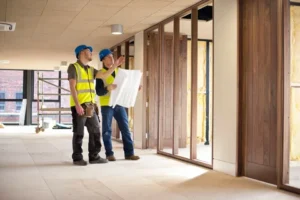
Phase Seven: Final Inspections and Activation
Building department inspections, health department final approval, and any specialty inspections. Once all approvals are in place, the practice can open.
Total construction timeline for a new dental office in Selma typically runs 5 to 9 months from groundbreaking to opening. Tenant improvements run 3 to 6 months.
Step Seven: Equipment Installation Coordination
Dental equipment installation deserves its own attention because it has to integrate with the building construction.
Major equipment items include:
Dental chairs and operatory lights (one set per operatory).
Compressors and vacuum pumps (typically in an equipment room).
Sterilization equipment including autoclaves.
Imaging equipment ranging from intraoral X-rays to panoramic and CT systems.
Cabinetry and dental-specific casework.
Computers and software systems for clinical and practice management.
The equipment vendor and the construction team need to coordinate carefully. Plumbing rough-ins need to align with chair positions. Electrical needs to match equipment specifications. Cabinetry needs to fit specific equipment configurations.
A 2022 study by the American Association of Dental Office Architects found that 75 percent of dental practice opening delays could be traced to inadequate coordination between construction teams and dental equipment vendors. Good project management bridges this gap effectively.
Step Eight: Pre-Opening Final Steps
In the weeks before opening, several final items need completion:
Final building inspections and certificate of occupancy.
Health department approvals for the dental facility.
Equipment commissioning and testing.
Staff training on new equipment and facility.
Final cleaning and patient-ready preparation.
Signage installation.
Marketing for the opening.
Insurance and credentialing finalization with payers.
Plan at least 4 to 6 weeks of buffer time between expected completion and your opening date. Real-world projects rarely finish exactly on schedule, and pre-opening tasks need adequate time to complete properly.
Final Thoughts
Dental office construction is one of the most specialized categories of commercial work. The dentists who go through this process with realistic expectations, qualified contractors who understand dental-specific requirements, and careful coordination of construction and equipment consistently end up with practices that support their clinical work for decades. Time spent on careful planning, design, and contractor selection saves significant money and stress through the construction phase and beyond.
Our team offers Experts Dental office construction services in Selma, CA with comprehensive pre-construction planning, full construction management, and detailed coordination with dental equipment vendors. If you are planning a dental practice construction project and want straight answers about scope, timeline, and budget for your specific situation, reach out and we are happy to discuss your options and provide a detailed quote.
Frequently Asked Questions
How long does it take to build a dental office in Selma, CA?
A typical dental office project from initial design to practice opening runs 9 to 15 months. Design and engineering take 2 to 4 months. Permits take 3 to 6 months. Construction itself runs 5 to 9 months for new construction or 3 to 6 months for tenant improvements. Building a buffer of 4 to 6 weeks between expected completion and opening date helps absorb the typical delays that come up in any construction project.
What is the difference between dental office construction and general office construction?
Dental offices have specialty requirements that general offices do not. Multiple plumbing connections per operatory. Vacuum and compressed air systems. Dedicated electrical circuits for dental equipment. HVAC designed for medical use. Imaging equipment shielding requirements. Infection control finishes. These specialty systems and finishes add 40 to 60 percent to the cost per square foot compared to general office construction.
Do I need a specialized dental architect for my project?
For dental office construction, working with an architect or design team experienced in dental practice design is strongly recommended. Dental practice design has specific best practices that general commercial architects often miss. Layout efficiency, equipment positioning, plumbing routing, and infection control all benefit from dental-specific expertise. Some general contractors who work regularly on dental projects can also provide this expertise through their team.
How much should I budget for dental office construction?
A typical 3,000 square foot dental office in the Selma area runs $500,000 to $1,200,000 for full new construction including basic finishes. Tenant improvements run somewhat lower. These numbers do not include dental equipment, which typically adds $300,000 to $600,000 or more depending on operatory count and technology level. Always plan for contingency of 10 to 15 percent above the contracted construction cost.
Can I keep my existing dental practice operational during construction?
Generally no, if the construction is on the same space. Dental construction creates dust, noise, and disruption incompatible with clinical operations. Most dental practice construction projects involve either building out a new space before moving from the old one, or temporarily closing operations during the most disruptive phases. Practice owners typically combine construction timing with planned breaks like staff vacations or extended weekends to minimize lost clinical days.