Skip to content
Most commercial projects don’t fail because of bad blueprints. They fail because nobody managed the gap between the drawing and the dirt. That’s exactly where expert commercial construction management in Madera, CA earns its keep, and it’s the discipline Hamel Development, Inc has spent years refining across the Central Valley. When a project has a clear owner who watches the budget, the schedule, and the quality all at once, the difference shows up in the final walkthrough and in the bank account.
Madera sits in a sweet spot. It’s growing, land is still reasonable compared to bigger metros, and businesses keep expanding here. But growth invites complexity. Permits, inspections, subcontractor availability, material lead times, and code requirements all move at the same time. A strong construction manager keeps those plates spinning so the business owner can stay focused on running the business.
Let me walk you through what good management actually looks like on the ground, why it matters more than most people realize, and how the right approach protects both your timeline and your money.
What Commercial Construction Management Really Involves
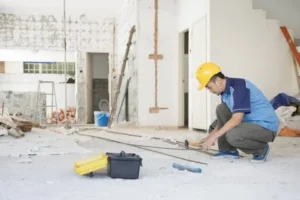
People hear “construction management” and picture a guy in a hard hat pointing at things. The real work happens long before the first shovel and continues well after the framing goes up.
A construction manager acts as the single point of accountability for the entire build. They translate the owner’s vision into a buildable plan, then guard that plan against the hundred small decisions that can quietly drain a budget. Think of it like a head chef in a busy kitchen. The chef doesn’t cook every dish, but nothing leaves the pass without their say-so.
In practice, a competent commercial general contractor handles preconstruction planning, cost estimating, scheduling, subcontractor coordination, and quality control. They also manage risk, which is the part nobody markets but everybody needs. According to data from the Construction Industry Institute, projects with strong front-end planning routinely come in up to twenty percent under the cost of poorly planned ones. That gap is real money.
Preconstruction: Where Projects Are Won or Lost
The preconstruction phase decides whether your project runs smoothly or fights you the whole way. This is when a manager pressure-tests the design against the budget and the site conditions.
I’ve seen owners fall in love with a design that looked perfect on paper, only to learn the soil needed expensive reinforcement or the chosen layout triggered costly ADA compliance upgrades. A good manager catches those issues during planning, when changes cost a phone call instead of a demolition crew.
This stage covers value engineering, permit strategy, and a realistic schedule built around Madera’s actual inspection timelines. Skipping it to “save time” almost always costs more later.
Coordinating the Trades and the Timeline
Once the build starts, coordination becomes the daily battle. Electricians, plumbers, framers, and concrete crews all need access to the same space without tripping over each other.
A skilled manager sequences the work so the commercial electrical installation happens before the drywall, the rough plumbing gets inspected before the slab pours, and nobody waits three days for a crew that never got scheduled. It sounds simple. It almost never is.
Why Madera Businesses Need Local Construction Expertise
National firms parachute into markets all the time, and they often misread the local terrain. Madera has its own permitting rhythms, its own pool of reliable subcontractors, and its own seasonal patterns that affect everything from concrete curing to crew availability.
Local commercial construction experts already know which inspectors expect what, which suppliers actually deliver on time, and how Fresno County requirements shape the build. That knowledge shortens timelines in ways an outsider simply can’t replicate. Working with builders rooted in the region means fewer surprises and faster problem-solving when something inevitably goes sideways.
There’s also the relationship factor. When a manager has worked with the same trusted subcontractors for years, those crews show up, take pride in the work, and answer the phone. That reliability is worth more than any glossy proposal.
Serving the Broader Central Valley
While Madera is home base, strong commercial construction services near me in Madera, CA searches usually point toward firms that cover the surrounding region too. Quality builders extend their reach across Fresno County because the same crews, suppliers, and expertise carry over.
Whether the project sits in the city center or out near the agricultural corridor, the fundamentals stay the same: tight planning, honest communication, and disciplined execution.
Types of Commercial Projects That Benefit Most
Construction management isn’t one-size-fits-all. The approach shifts dramatically depending on what you’re building, and matching the method to the project type is half the battle.
Ground-up commercial construction starts with raw land and ends with a finished building. These projects demand the most coordination because every system gets built from scratch. Site development, structural steel construction, commercial concrete services, roofing, and full mechanical systems all stack on top of each other in a precise order.
Tenant improvements and commercial build-out services work differently. Here you’re transforming an existing shell or remodeling an occupied space, often while the business next door stays open. Tenant improvement contractors specialize in this dance, and the management challenge becomes minimizing disruption while still hitting the deadline.
Office, Retail, and Specialized Builds
Office construction services and office renovation contractors deal with a specific set of priorities: efficient layouts, modern infrastructure, and spaces that help teams actually work. Office remodeling projects frequently involve reconfiguring open floors, upgrading data and electrical, and refreshing finishes without gutting the whole building.
Retail construction services and retail space renovation carry their own pressures. A storefront has to look right, flow well, and open on schedule, because every closed day is lost revenue. The manager’s job is protecting that opening date like it’s sacred.
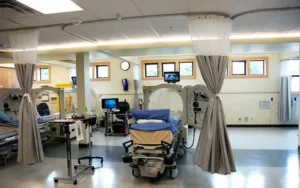
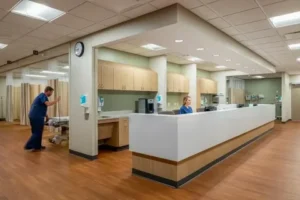
Then there are the highly regulated builds. Healthcare facility construction and medical office construction demand strict adherence to specialized codes, infection-control protocols, and equipment requirements. Restaurant construction services involve complex kitchen ventilation, grease management, and health-department coordination. These projects punish shortcuts, so experienced management isn’t optional here.
Industrial and Warehouse Construction
Warehouse construction and industrial construction services prioritize function, durability, and speed-to-operation. Wide spans, heavy-duty flooring, loading infrastructure, and energy-efficient systems define these builds.
The management focus shifts toward logistics and structural efficiency. A well-run warehouse project gets the business operational fast, because in distribution and manufacturing, every week of delay hits the bottom line hard.
The Design-Build Advantage
One framework keeps proving its worth across the industry: design-build construction. Instead of separating the designer and the builder into two contracts that often point fingers at each other, design-build unites them under one accountable team.
The benefits show up immediately. The team prices the design as it develops, so you never finish a beautiful set of plans only to discover you can’t afford to build them. Industry research from the Design-Build Institute of America shows design-build projects deliver faster and with fewer cost overruns than the traditional approach. The collaboration removes the blame game and replaces it with shared ownership of the outcome.
For business owners, this means fewer headaches and one phone number to call when questions come up. That single point of contact, backed by integrated commercial project management, turns a chaotic process into a manageable one.
What Separates Great Management From Average
Plenty of firms can pour concrete and hang drywall. Far fewer can manage a complex commercial project so it finishes on time, on budget, and built to last. The difference comes down to a handful of habits.
Great managers communicate relentlessly. You always know where your project stands, what’s coming next, and what decisions you need to make. They also tell you the hard truths early, because a problem surfaced in week two costs a fraction of the same problem discovered in week twelve.
They obsess over building code compliance and quality control, treating inspections as checkpoints rather than obstacles. They build realistic schedules instead of fantasy timelines designed to win the bid. And they protect your budget with transparent cost tracking, so change orders never become ambush invoices.
Energy efficiency has also moved from nice-to-have to essential. Smart managers now plan for energy-efficient commercial buildings from day one, because the long-term operating savings often dwarf the upfront cost. Building lean today pays dividends for the entire life of the property.
Conclusion
Commercial construction is too expensive and too consequential to leave to chance. The projects that succeed share a common thread: somebody competent owned the process from the first sketch to the final inspection. That ownership is the entire value of expert construction management, and it’s the standard Hamel Development, Inc brings to every commercial project across Madera and the wider Fresno County region.
If you’re planning a build, a renovation, or a tenant improvement, start the conversation early. The best time to involve a construction manager is before the design is locked, when smart planning can still shape the budget and the timeline in your favor. Reach out, lay out your vision, and let an experienced team turn it into a building that works as hard as you do.
FAQs
How much does commercial construction management cost in Madera, CA?
Management fees typically run between five and fifteen percent of the total project cost, depending on size and complexity. The investment usually pays for itself through fewer costly mistakes, better subcontractor pricing, and a tighter schedule that reduces overhead.
What’s the difference between a general contractor and a construction manager?
A commercial general contractor builds the project and carries the construction risk, while a construction manager guides the entire process, often from preconstruction onward, as the owner’s advocate. Many firms, including full-service builders, blend both roles under one accountable team.
How long does a commercial construction project take in Madera?
Timelines vary widely. A straightforward tenant improvement might finish in six to twelve weeks, while ground-up commercial construction can take six months to over a year. Permitting, design complexity, and material lead times all influence the schedule.
Is design-build better than the traditional construction approach?
For most commercial projects, yes. Design-build construction unites design and building under one contract, which speeds delivery, reduces cost overruns, and eliminates finger-pointing between separate parties. It also gives the owner a single point of accountability.
Can construction continue while my business stays open?
Often, yes. Experienced tenant improvement contractors specialize in phased work that minimizes disruption, scheduling noisy or invasive tasks around your operating hours. Clear communication and careful sequencing make it possible to renovate without shutting down.
Do I need permits for a commercial remodel in Madera?
Almost always. Structural changes, electrical and plumbing work, and ADA compliance upgrades typically require permits and inspections. A knowledgeable local builder handles the permit strategy so your project stays compliant and avoids costly delays.
What types of commercial buildings can be constructed?
The range is broad: office buildings, retail spaces, restaurants, medical and healthcare facilities, warehouses, and industrial structures. Each carries unique code requirements and design priorities, which is why specialized management experience matters so much.